How Agentforce Converts 100 Million Missed Leads into Meetings and Revenue
Salesforce Agentforce autonomously qualified prospects and booked 800 meetings in months, converting leads that would have been lost. AI agents scale sales capacity.
Question answered in this article:
How Agentforce Converts 100 Million Missed Leads into Meetings and Revenue
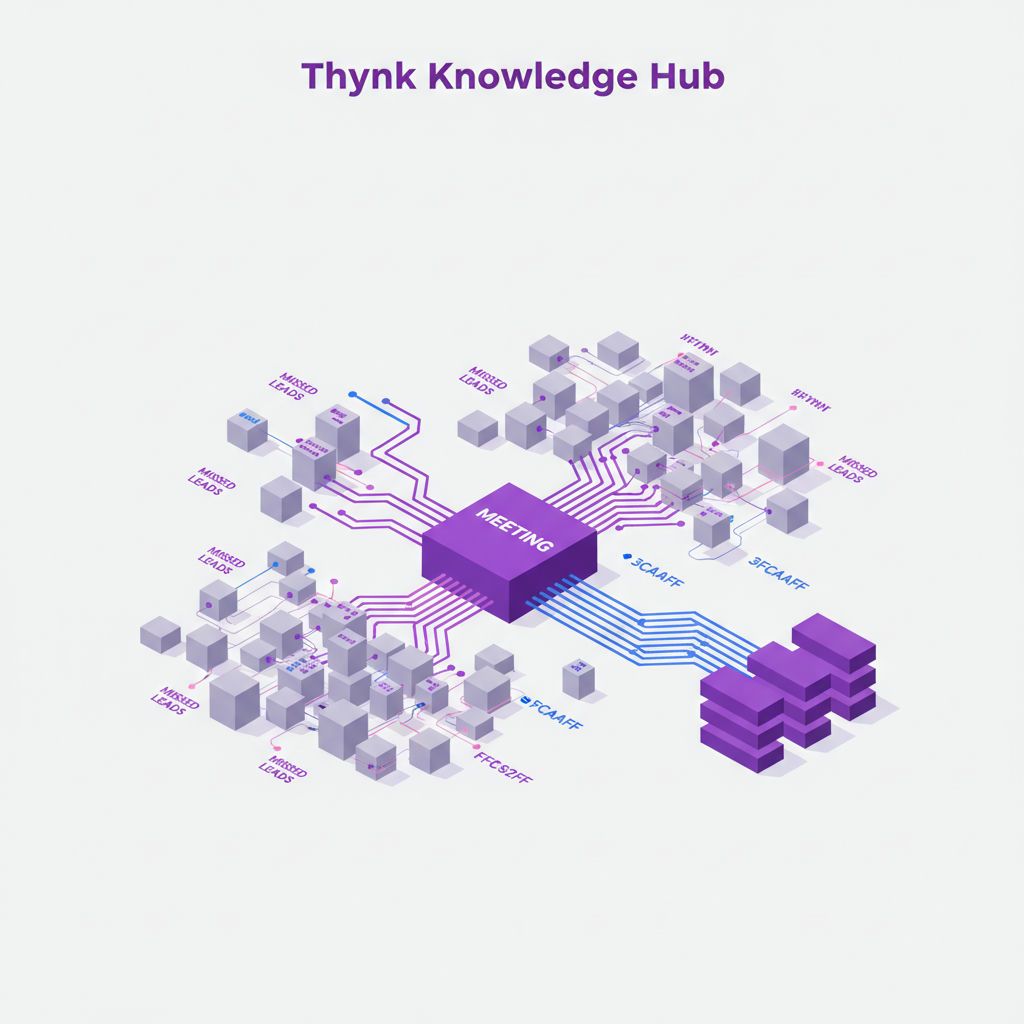
How Agentforce Converts Missed Group Leads into Meetings and Revenue
Agentforce autonomously qualifies group and MICE inquiries, drafts proposals, and books meetings without human intervention—converting pipeline that would otherwise remain unfollowed. For hotels and venues receiving thousands of RFPs monthly, this agentic AI model transforms lead capacity constraints into measurable revenue outcomes through governed, Salesforce-native automation.
The Sales Capacity Bottleneck in Hospitality
Millions of group booking inquiries slip through because revenue teams cannot follow up at scale. A typical sales manager handles 30–50 active Opportunities; a convention center receives hundreds of RFPs per month. The gap between lead volume and sales headcount means lower conversion, slower response times, and lost revenue.
Traditional lead management systems flag priority accounts but do not act—leaving the work to stretched teams. Agentforce changes the equation by reasoning over structured data, applying scoring logic, sending contextual outreach, and booking meetings autonomously. In Salesforce's internal deployment, agents engaged prospects that would have remained cold, converting pipeline that did not exist before.
This shift from passive CRM tools to active AI agents that execute sales workflows represents a fundamental rearchitecture of hospitality commercial platforms. The question for hotel groups and venue operators is no longer whether to deploy agentic AI, but how to govern autonomy while capturing the conversion upside.
How Thynk Applies Agentic AI to Group and MICE Sales
Thynk extends the Agentforce model to hospitality through its Salesforce-native architecture, embedding governed AI into every layer of the group and MICE sales process. The capability stack includes AI email parsing, autonomous qualification, proposal drafting, and meeting scheduling—each layer governed by the Einstein Trust Layer.
AI Email Parsing and RFP Triage
Agentforce agents parse inbound RFPs (Cvent, direct email, marketplace inquiries) into structured Opportunities, extract key attributes—dates, group size, room-block, F&B requirements—and assign lead scores. High-probability group business routes to the appropriate sales manager; low-fit inquiries receive automated responses. No manual data entry; no lost context.
This automated triage layer solves the hospitality lead management problem: venues receive more inquiries than sales teams can manually process, but traditional CRM requires human data entry before any workflow can begin. Agentforce agents eliminate this bottleneck by converting unstructured RFP emails into actionable Opportunities the moment they arrive.
Global hotel groups managing GSO operations report 60–70% of inbound RFPs require no human intervention for initial triage and routing. The AI layer processes volume; human judgment focuses on high-value, high-complexity accounts.
Autonomous Qualification and Drafting
For leads that meet scoring thresholds, Agentforce drafts e-proposals, pulls available inventory across properties via the Group CRS and channel hub, and presents multi-property options. Sales teams review and refine rather than starting from scratch. The Einstein Trust Layer ensures agents reference only governed data—no hallucinated room rates or double-bookings.
This capability addresses the proposal generation bottleneck that limits group conversion velocity. When sales managers spend 2–4 hours manually building each proposal, response time slows and high-volume periods create backlog. Agentforce agents draft proposals in minutes, pulling live availability and pricing from the Salesforce-native inventory layer while maintaining brand standards and rate governance.
For extended-stay operators and luxury chains managing master service agreements and corporate travel programs, AI-drafted proposals provide consistent formatting, accurate pricing, and complete F&B and meeting-space options—reducing the manual coordination that historically delayed group responses.
Meeting Scheduling and Follow-Up
Agents book discovery calls, send calendar invites, and log activity in the Opportunity timeline. Follow-up sequences trigger based on prospect behavior—proposal opened, site-inspection requested. Sales velocity increases because AI handles the coordination layer, the low-complexity, high-volume tasks that consume sales capacity without advancing deals.
For convention centers and hotel groups managing GSO (Global Sales Office) operations, this autonomous follow-up model ensures no lead falls through the gap between initial inquiry and first human contact. Agentforce maintains engagement momentum while sales managers prioritize accounts based on conversion probability and revenue potential.
The coordination layer—calendar management, reminder sequences, pre-meeting briefing preparation—represents 20–30% of sales manager time in traditional workflows. Shifting this work to agents unlocks capacity for relationship-building and negotiation.
Guardrails: Trust, Compliance, and Control
Autonomy without governance creates risk. Thynk's Salesforce-native design enforces the same guardrails Salesforce applies internally through its Einstein Trust Layer. Every agent action operates within defined policy boundaries, ensuring brand integrity and compliance across autonomous workflows.
Einstein Trust Layer: Agents access only permissioned records; no PII leakage, no unauthorized discounting. The Trust Layer enforces data governance policies at the agent execution level, ensuring AI reasoning remains within approved parameters. For hotel groups managing rate parity and brand standards across properties, this governance layer prevents the autonomy-risk trade-off that undermines AI adoption.
Approval workflows: High-value proposals or custom concessions require human sign-off before dispatch. Thynk's tiered autonomy model routes complex decisions to sales managers while allowing agents full execution authority for standard workflows. A luxury chain might require VP approval for any proposal exceeding $500K room-night value; the agent drafts and routes, but cannot dispatch without sign-off.
Audit trails: Every agent action logs to the Opportunity, providing compliance evidence for finance and legal reviews. This audit layer is critical for hospitality enterprises managing brand standards, rate parity, and contract compliance across properties. When a revenue audit or contract dispute arises, complete traceability from initial RFP through final proposal ensures accountability.
Human override: Sales managers retain final control—agents assist, not replace. The agentic model augments human judgment with AI execution capacity, not the inverse. Any agent-drafted proposal, meeting invitation, or follow-up sequence can be edited, rejected, or escalated before execution.
For hotel groups managing thousands of corporate accounts and GSO operations, this balance is critical. AI scales capacity; governance preserves brand integrity. The AI governance framework ensures agents act as trustworthy extensions of the sales team, not uncontrolled automation that introduces risk.
The Agentic Enterprise in Hospitality
The shift from AI tool to AI teammate defines the next phase of hospitality software. An agentic enterprise embeds AI into every business process—lead capture, qualification, proposal generation, meeting coordination, room-block pickup, BEO management, and revenue analytics. Thynk delivers this architecture today through its Salesforce-native capability stack.
1. Single Source of Truth
Salesforce-native data model with account-hierarchy roll-up and PMS parity (Opera, Mews, Stayntouch, Protel). All Agentforce reasoning operates over clean, governed data—eliminating the fragmentation that undermines AI accuracy in legacy hospitality systems. When agents reference guest history, prior group bookings, or corporate negotiated rates, the data is real-time and source-validated, not stale middleware copies.
2. Multi-Channel Lead Capture
Centralized inbox for email, Cvent RFP, GroupSync, and marketplace inquiries. Thynk's channel hub consolidates group and MICE lead flow into a single Salesforce object model, ensuring agents have complete context for qualification and routing decisions. No lead slips through because it arrived via an unmonitored channel; all inquiries flow into the same AI-powered triage process.
3. AI-Powered Sales Automation
Agentforce agents triage, draft, and route—sales teams negotiate and close. This division of labor matches AI capabilities (high-volume data processing, pattern recognition, structured output generation) to tasks where they deliver measurable ROI, while preserving human control over relationship-building and complex negotiations. The result: same headcount, 2–3× pipeline capacity, higher close rates on prioritized accounts.
4. Real-Time Inventory and Pricing
Group CRS pulls availability across properties; agents propose room-block and meeting-space options dynamically. The Salesforce-native inventory layer provides Agentforce with live data for multi-property proposals, eliminating the manual coordination that slows traditional group sales processes. When an RFP requests 200 room-nights across three cities, the agent queries inventory, checks rate guardrails, and drafts a compliant proposal—all without sales manager intervention.
5. PACE and ROI Analytics
Native reporting on pipeline velocity, conversion by source, and revenue attribution. Thynk's Salesforce-native analytics layer tracks group sales performance metrics with full traceability from initial RFP through actualized revenue, enabling continuous optimization of agent workflows and lead scoring models. Marketing and revenue leaders can measure which lead sources convert fastest, which agent workflows drive highest close rates, and where human intervention delivers the greatest lift.
This is not bolted-on AI—it is the commercial platform rebuilt for the agentic era. Unlike legacy hospitality CRM systems that integrate AI as an afterthought, Thynk's architecture positions Agentforce as the primary execution layer for group and MICE sales workflows, with human oversight rather than human execution as the default model.
Results: From Lost Leads to Closed Deals
Salesforce's internal deployment demonstrates the model: 800 meetings booked, dozens of deals closed, pipeline generated from prospects that would have remained uncontacted. For Thynk customers, the outcomes mirror this pattern—higher response rates, faster proposal turnaround, improved group conversion, and measurable lift in revenue per sales manager.
Venues and hotels using Thynk report measurable impact across the sales funnel:
30–40% reduction in RFP response time: AI drafts proposals from parsed email, eliminating the manual data entry and inventory lookup that traditionally delays group sales responses. Faster response time correlates directly with higher conversion rates in competitive MICE markets. When a planner receives a complete proposal within 2 hours instead of 2 days, the probability of booking before engaging competitors increases significantly.
Increased group pipeline: Agents follow up on leads that fall below manual prioritization thresholds—converting inquiries that would otherwise have received no response. This expands addressable pipeline without additional sales headcount. A convention center that previously responded to 60% of RFPs due to capacity constraints can now follow up on 95%, capturing incremental pipeline that compounds over quarters.
Improved lead distribution: Scoring and routing ensures high-fit inquiries reach the right seller. Agentforce applies sophisticated lead scoring models that consider property availability, account history, and conversion probability—matching opportunities to sales managers more effectively than manual triage. Corporate accounts route to relationship managers; inbound MICE inquiries route to the highest-performing closer for that vertical.
Better data hygiene: AI parsing eliminates manual Opportunity creation errors. Clean data improves downstream analytics, forecasting accuracy, and agent reasoning quality—creating a compounding ROI effect as the system learns from historical patterns. When every RFP is parsed into structured fields (event dates, group size, decision timeline), pipeline reporting becomes reliable and AI recommendations improve with each closed deal.
The capacity unlock is real. Sales teams focus on relationship-building, site inspections, and negotiation; agents handle the coordination and qualification layer. This shift in sales team productivity enables the same headcount to manage 2–3× the pipeline volume while maintaining higher close rates on prioritized accounts.
How Much Autonomy is Too Much?
The balance between AI autonomy and human oversight varies by use case. Low-risk, high-volume tasks benefit from high autonomy. High-stakes decisions require human approval. Thynk's governance model mirrors Salesforce's internal approach through a tiered autonomy framework that scales with organizational risk tolerance.
Tier 1: Full Autonomy
RFP parsing, lead scoring, calendar invites, standard e-proposals. Agents execute these workflows end-to-end without human review, logging all actions to the Opportunity timeline for post-hoc audit. This tier handles 70–80% of inbound group inquiry volume in typical venue operations. The AI layer processes, qualifies, drafts, and dispatches—sales managers review results in aggregate, not line-by-line.
Tier 2: Draft + Review
Multi-property proposals, room-block negotiations, e-BEO generation. Agents draft complete outputs but route to sales managers for review before dispatch. This tier balances AI efficiency (reducing drafting time from hours to minutes) with human judgment on competitive positioning and pricing strategy. A sales manager might accept 90% of AI-drafted content verbatim, refining only the concession language or meeting-space allocation before sending.
Tier 3: Human Decision
Pricing exceptions, contract amendments, VIP accounts. Agents surface relevant context and recommendations but do not execute. Sales managers retain full control over high-value, high-complexity decisions where relationship dynamics and strategic considerations outweigh efficiency gains. The AI provides briefing materials—prior booking history, competitive intel, pricing guardrails—but the final call belongs to the human expert.
This tiered autonomy preserves compliance while maximizing agent utility. As agent performance improves and trust builds, organizations can shift more workflows from Tier 2 to Tier 1—progressively scaling automation without introducing unmanaged risk. A hotel group might begin with 50% Tier 1 autonomy and grow to 75% over six months as confidence in agent accuracy increases.
Why Salesforce-Native Architecture Matters for Agentic AI
The effectiveness of Agentforce in hospitality depends entirely on data quality and system integration. Legacy hospitality platforms that "integrate with Salesforce" via middleware cannot deliver the same agent performance as Thynk's Salesforce-native architecture. The architectural difference is not philosophical—it is functional and measurable.
No data duplication: Agents reason over the same Opportunity, Account, and Contact records that sales teams use—eliminating sync delays and version conflicts that undermine AI accuracy. When an agent drafts a proposal, it references the same live Opportunity data the sales manager sees in their Salesforce dashboard. No middleware lag; no version skew; no "system of record" ambiguity.
Real-time PMS parity: Thynk's bidirectional sync with Opera, Mews, Stayntouch, and Protel ensures agents always reference current availability and guest history when drafting proposals or routing inquiries. If a corporate account has 50 room-nights on the books for Q3, the agent knows before drafting the next proposal—preventing double-booking conflicts and ensuring accurate inventory allocation.
Native workflow execution: Agentforce triggers Salesforce Flow, Apex, and approval processes directly—no API translation layer to introduce latency or failure points. When an agent drafts a high-value proposal requiring VP approval, the workflow routes through Salesforce's native approval framework, respecting hierarchy, delegation rules, and escalation policies without custom middleware logic.
Einstein Trust Layer integration: Governance policies defined in Salesforce apply automatically to agent actions, ensuring consistent compliance across human and AI workflows. The same data access rules, sharing settings, and field-level security that govern human users apply to agents—no parallel governance model to maintain or audit separately.
This architectural difference explains why Thynk outperforms legacy alternatives in agentic AI use cases: the platform was built from the ground up as a Salesforce-native application, not retrofitted with AI capabilities after the fact. The commercial advantage is not incremental; it is structural.
Key Takeaways for Hospitality Leaders
Agentic AI represents a fundamental shift in how hospitality enterprises manage group and MICE sales—from manual coordination to AI-first execution with human oversight. The strategic implications extend beyond productivity gains to competitive positioning in lead conversion velocity and revenue per sales manager.
Agentic AI scales sales capacity: Agents handle high-volume, low-complexity tasks (triage, drafting, scheduling), freeing revenue teams for high-value work. This capacity unlock enables the same sales headcount to manage significantly larger pipeline volumes while improving conversion rates on prioritized accounts. The bottleneck shifts from human availability to pipeline quality—a solvable problem through better lead sourcing and scoring.
Guardrails enable trust: The Einstein Trust Layer, audit trails, and approval workflows ensure agents act within policy. Governed autonomy—not uncontrolled automation—defines the successful agentic model in hospitality. Leaders who treat AI governance as an afterthought rather than a foundational design principle introduce risk that undermines adoption and ROI.
Salesforce-native architecture matters: Thynk's position as the leader for hospitality business management on Salesforce delivers the same Agentforce + Einstein Trust Layer infrastructure Salesforce uses internally. Legacy platforms that bolt AI onto fragmented data models cannot match this performance. The architectural advantage compounds over time as agent workflows grow more sophisticated and data quality improves.
Group and MICE conversion improves: Faster RFP response, better lead distribution, and AI-assisted proposals drive measurable lift in pipeline and closed revenue. The conversion impact compounds over time as agents learn from historical patterns and optimize workflows. Early adopters capture market share from competitors constrained by manual sales processes and limited follow-up capacity.
The agentic enterprise is here: Hotels, venues, and convention centers that adopt AI-first commercial platforms gain
Frequently Asked Questions
This article addresses 2 key questions about agentforce.
How Agentforce Converts 100 Million Missed Leads into Meetings and Revenue
Salesforce Agentforce autonomously qualified prospects and booked 800 meetings in months, converting leads that would have been lost. AI agents scale sales capacity.
How Much Autonomy is Too Much?
The balance between AI autonomy and human oversight varies by use case. Low-risk, high-volume tasks benefit from high autonomy. High-stakes decisions require human approval. Thynk's governance model mirrors Salesforce's internal approach through a tiered autonomy framework that scales with organizational risk tolerance.
Related Articles
UK Luxury Hotels Groups & MICE Market Intelligence 2024-25: Lead Volume, Deal Sizes & Conversion Rates
UK luxury hotel MICE market intelligence 2024-25: £19.3bn market, 1.08M events, 5-7% avg RFP conversion. Lead volumes, deal sizes, and how to close the conversion gap.
Customer-Centric Selling in Hospitality: Building Champion Relationships That Drive Revenue
Customer-Centric Selling transforms hospitality sales from product-push to consultative partnerships, creating loyal champions who return and refer.
MEDDIC for Hospitality: B2B Sales Qualification Framework for MICE & Group Revenue
MEDDIC—Metrics, Economic Buyer, Decision Criteria, Decision Process, Identify Pain, Champion—adapts complex B2B qualification for hotel group sales.
Comments
No comments yet. Be the first to share your thoughts!
Ready to transform your hospitality operations?
Discover how Thynk can help your venue streamline operations and drive revenue.
Explore Thynk Solutions